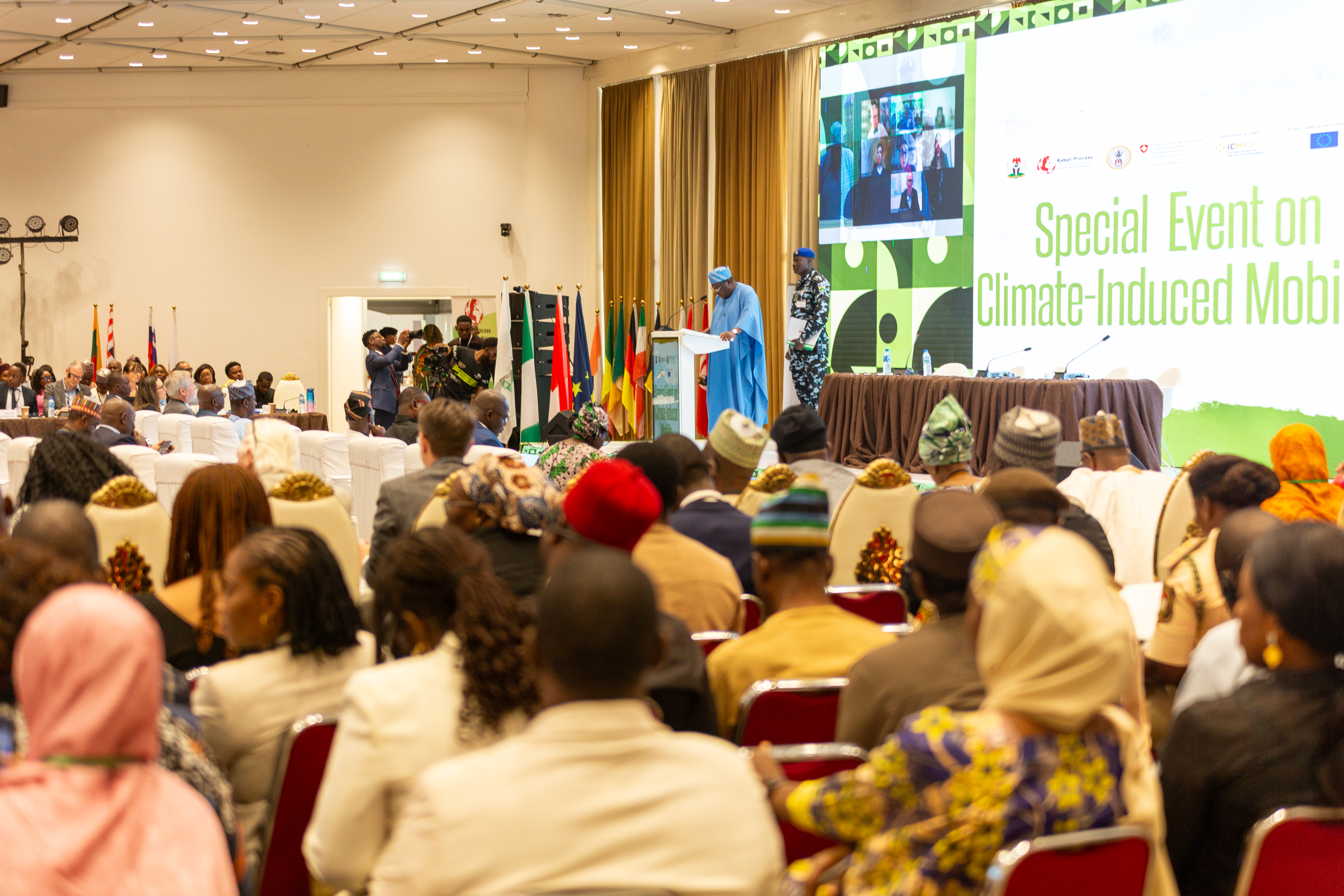


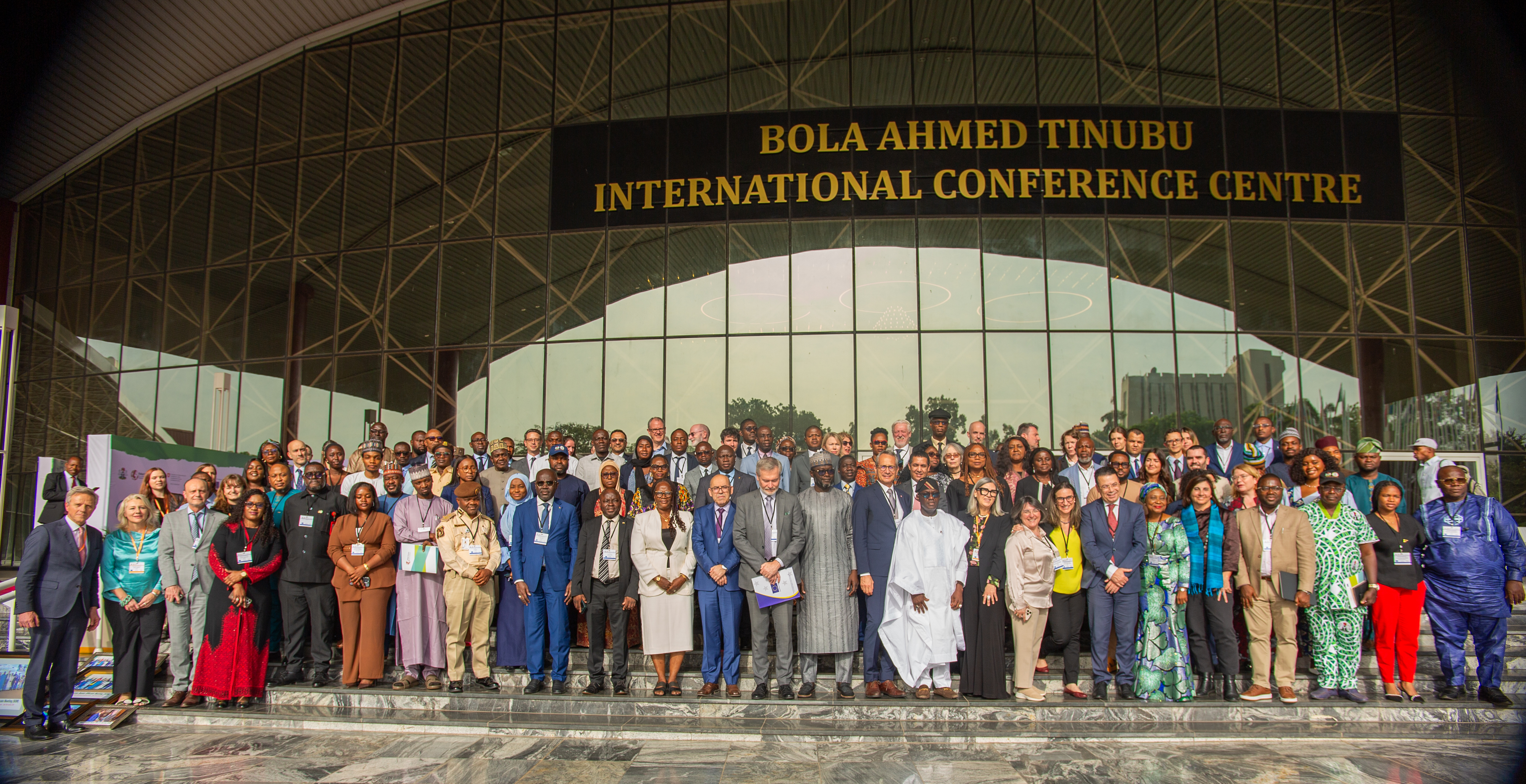
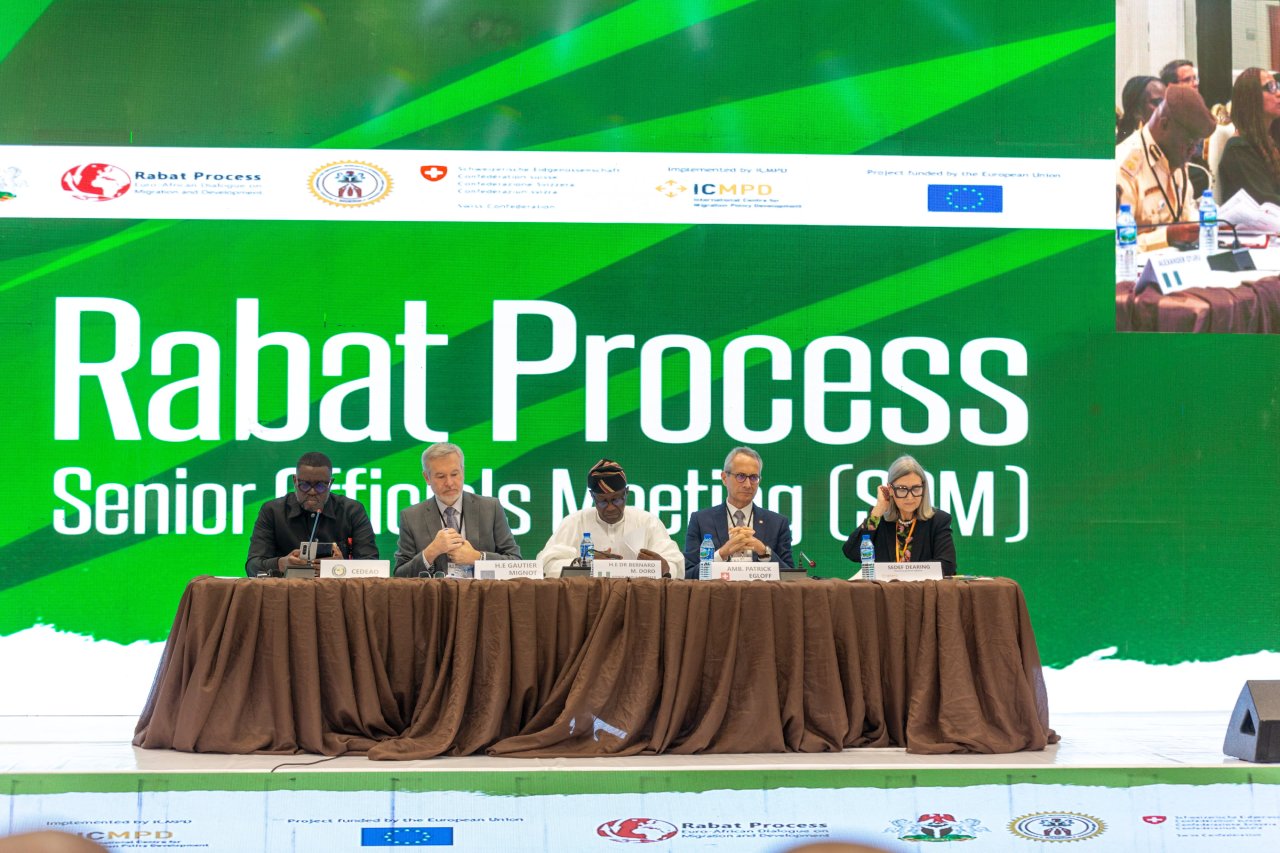
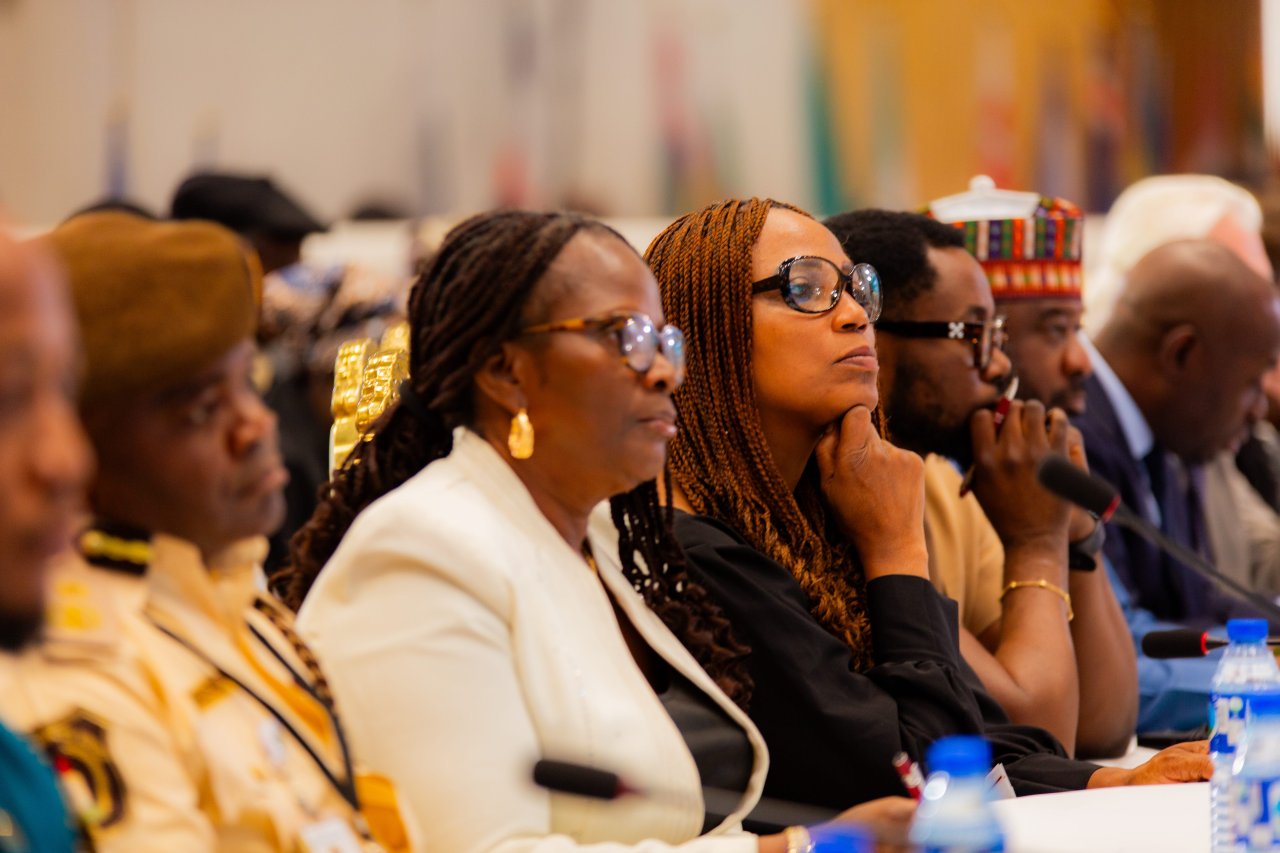
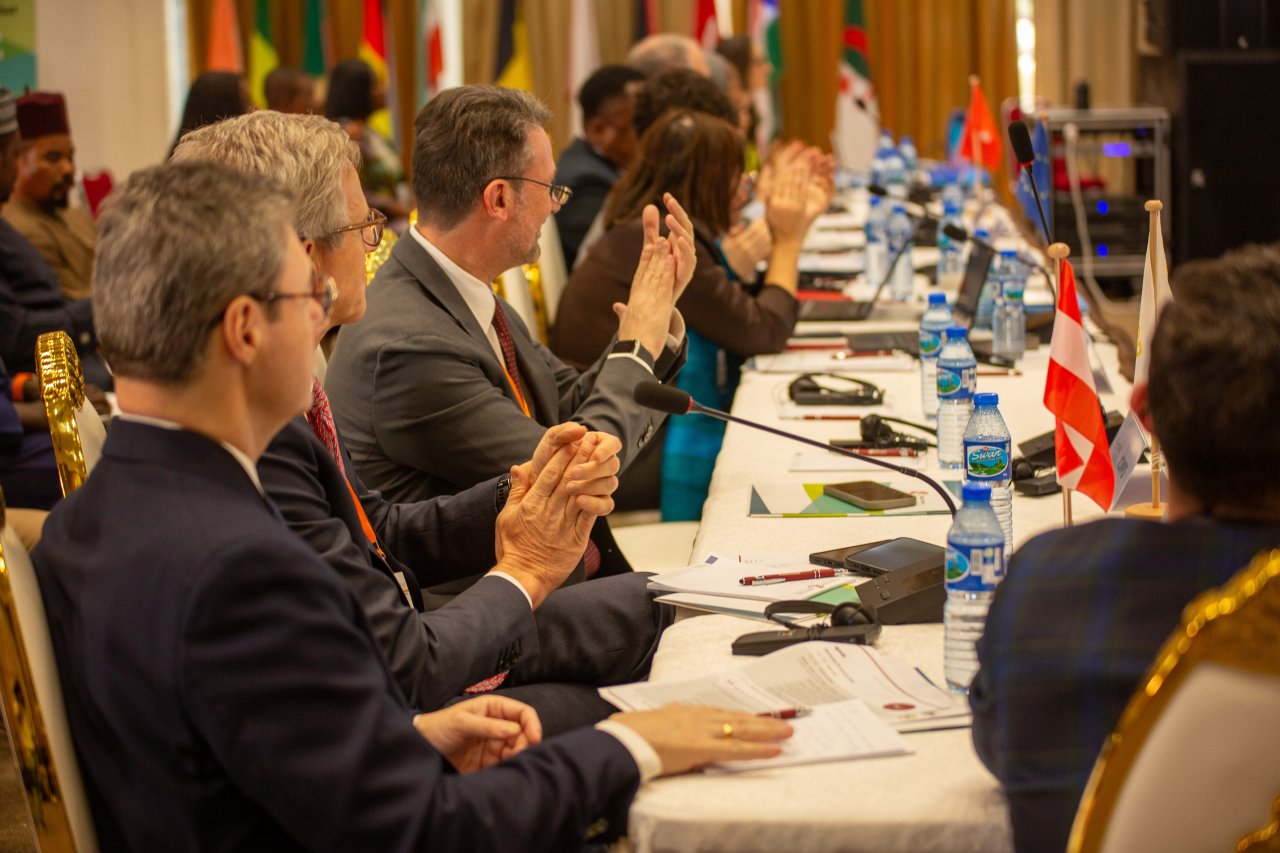
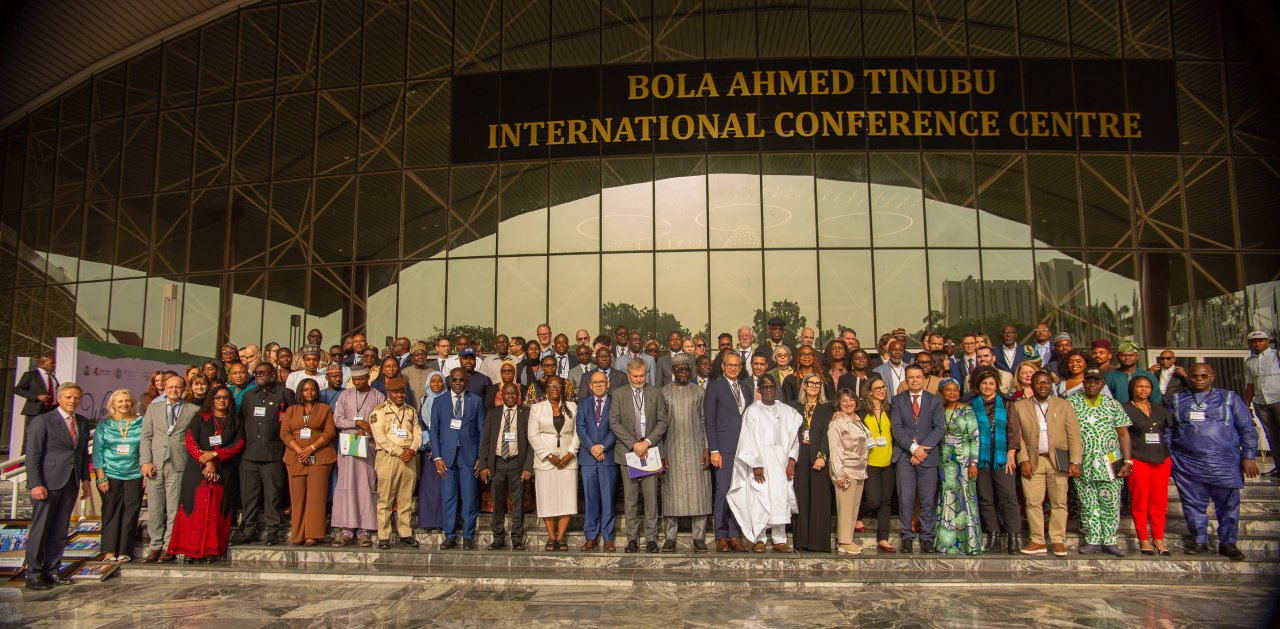
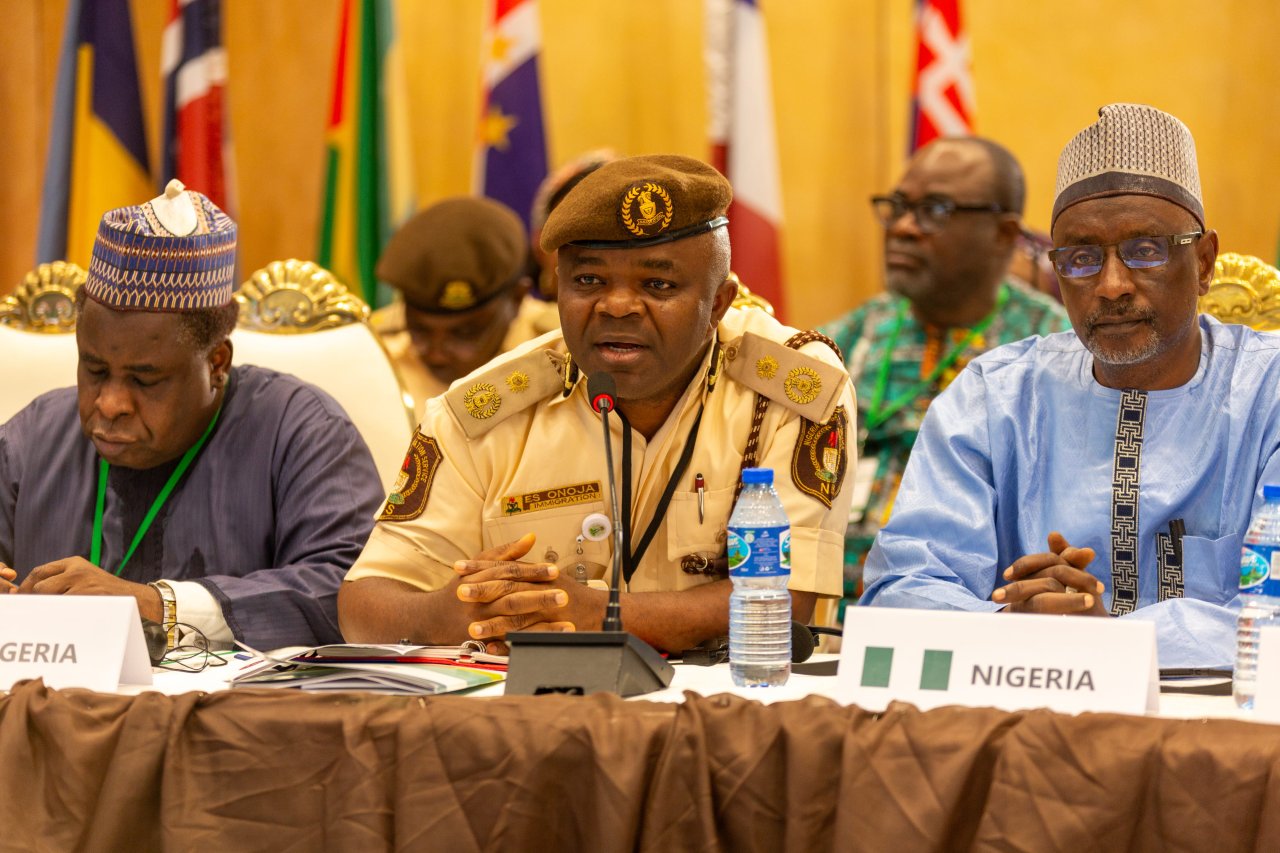
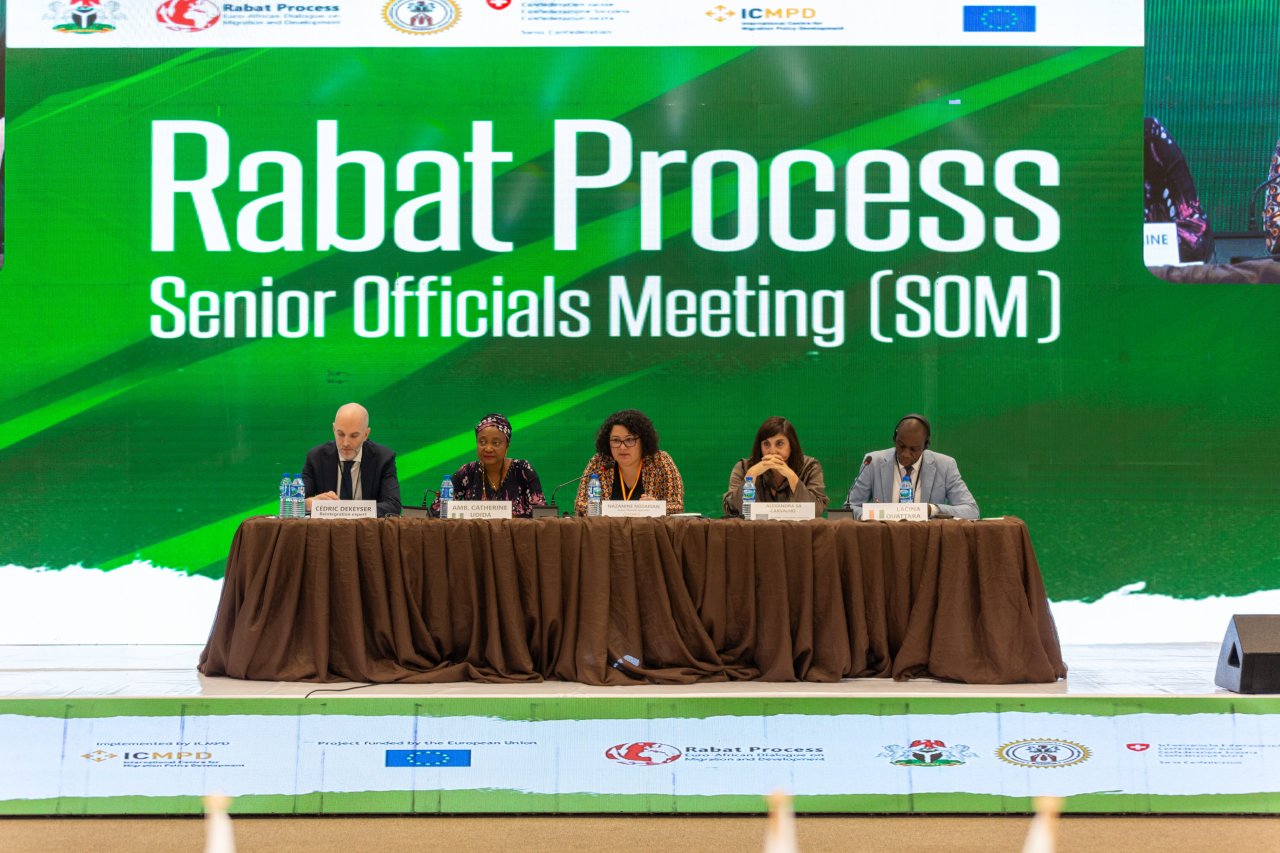
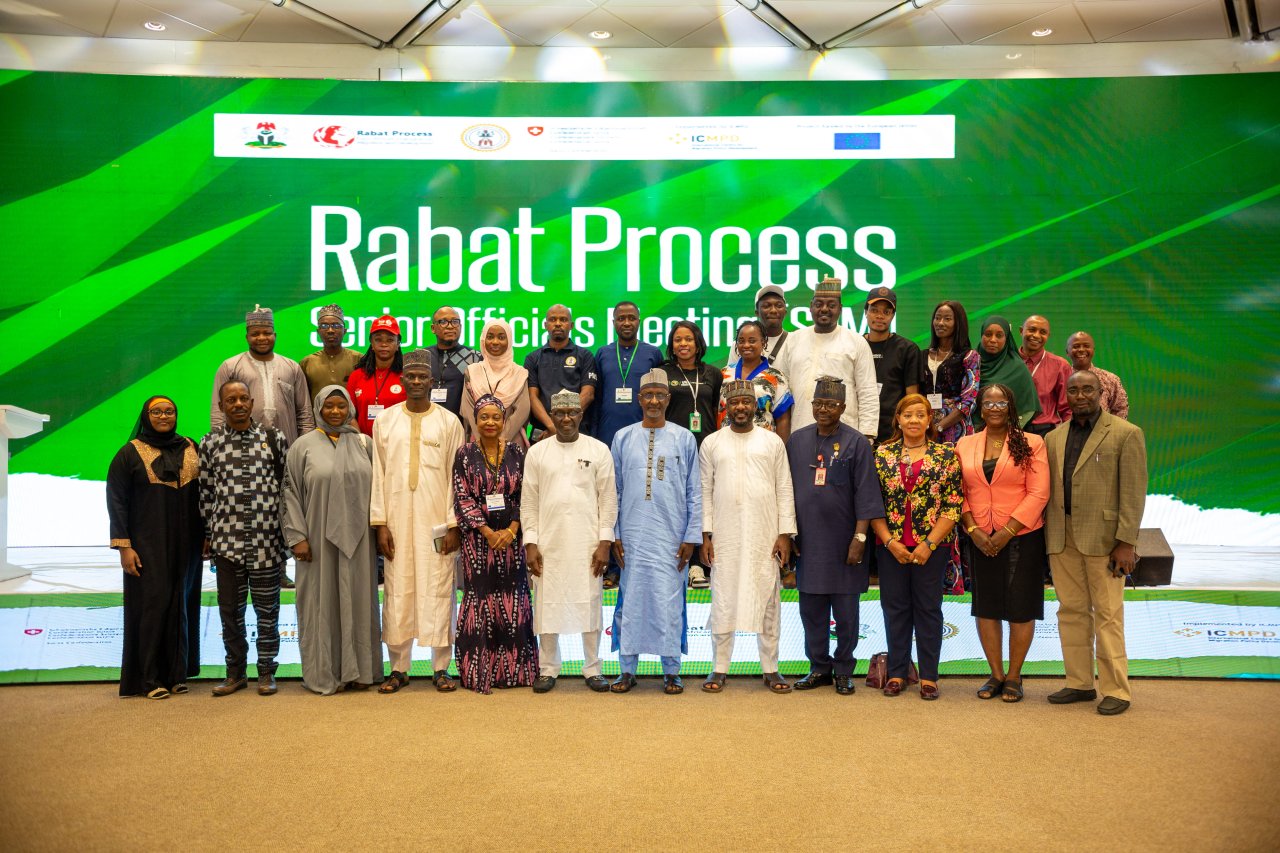
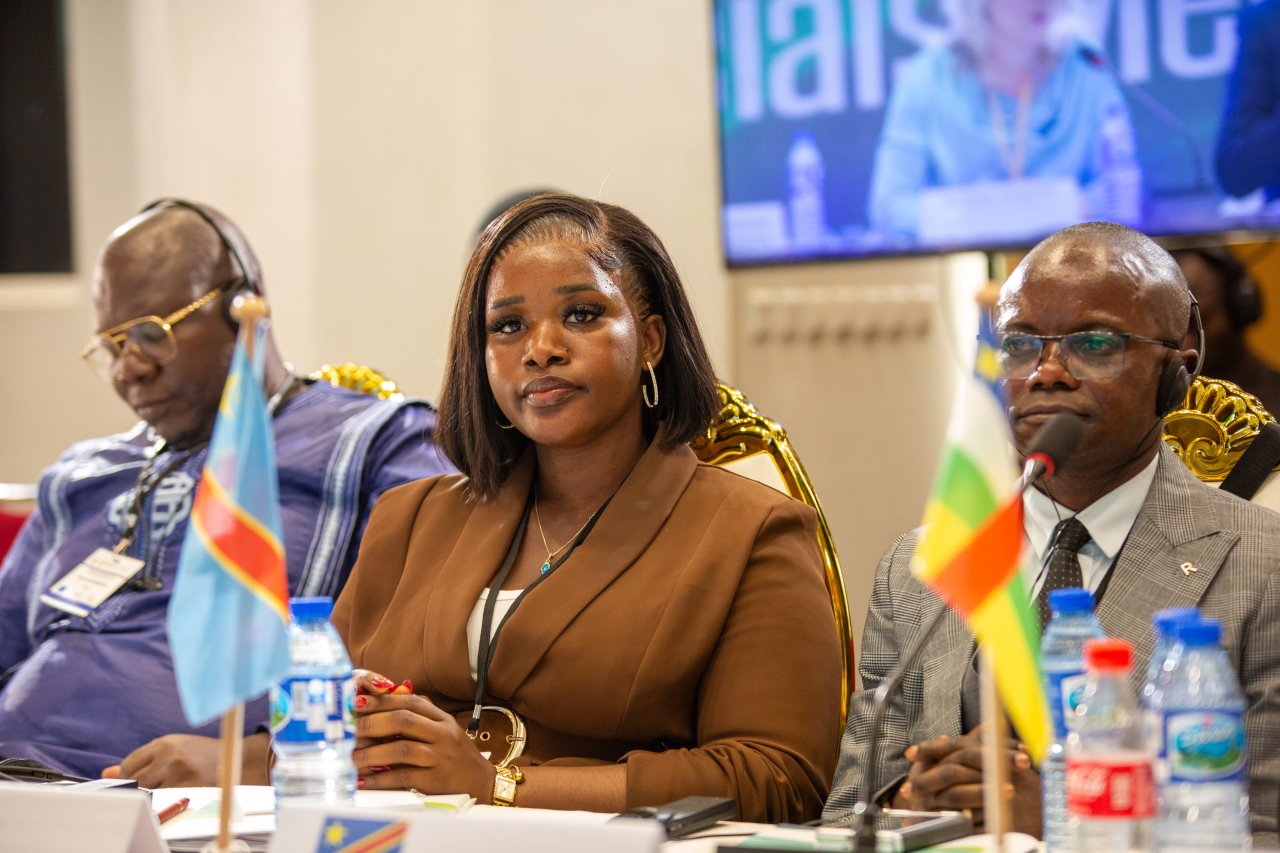
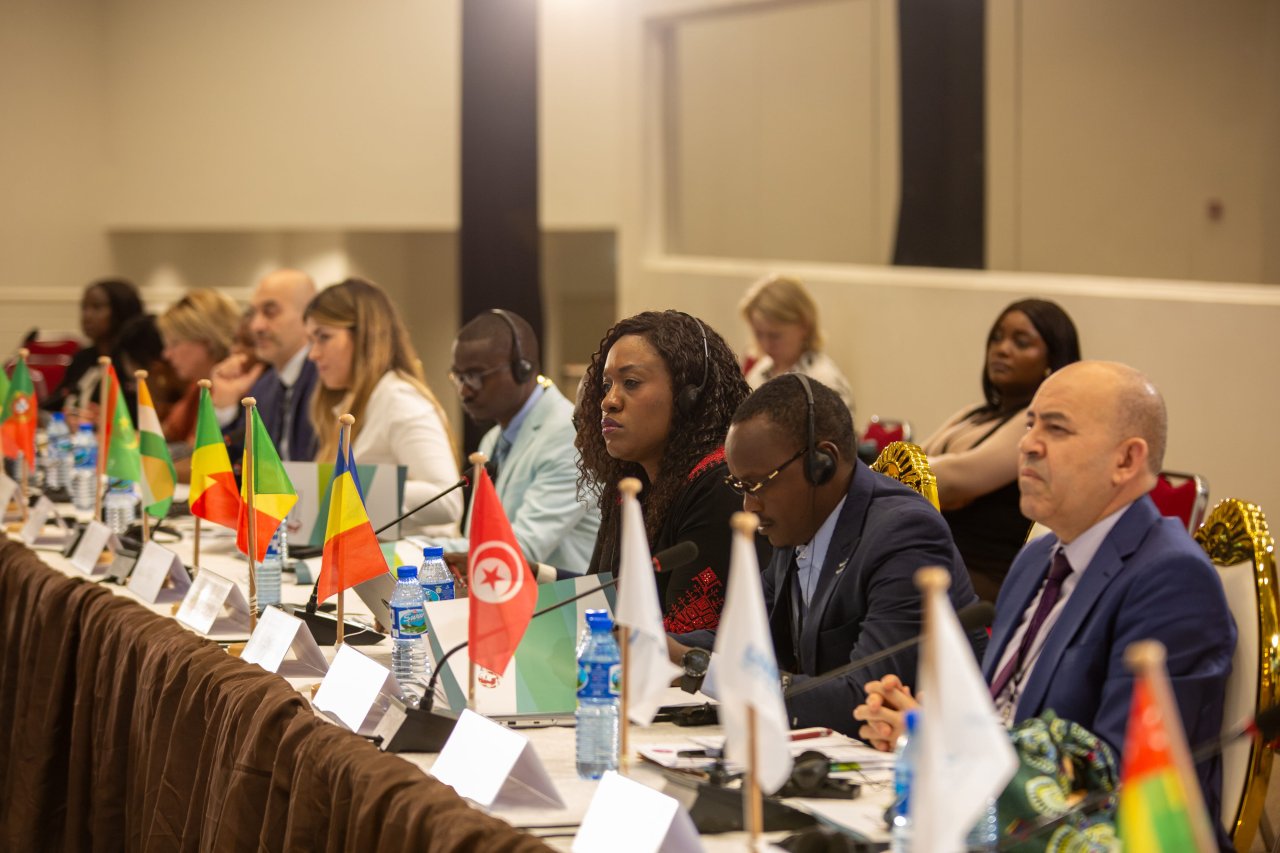
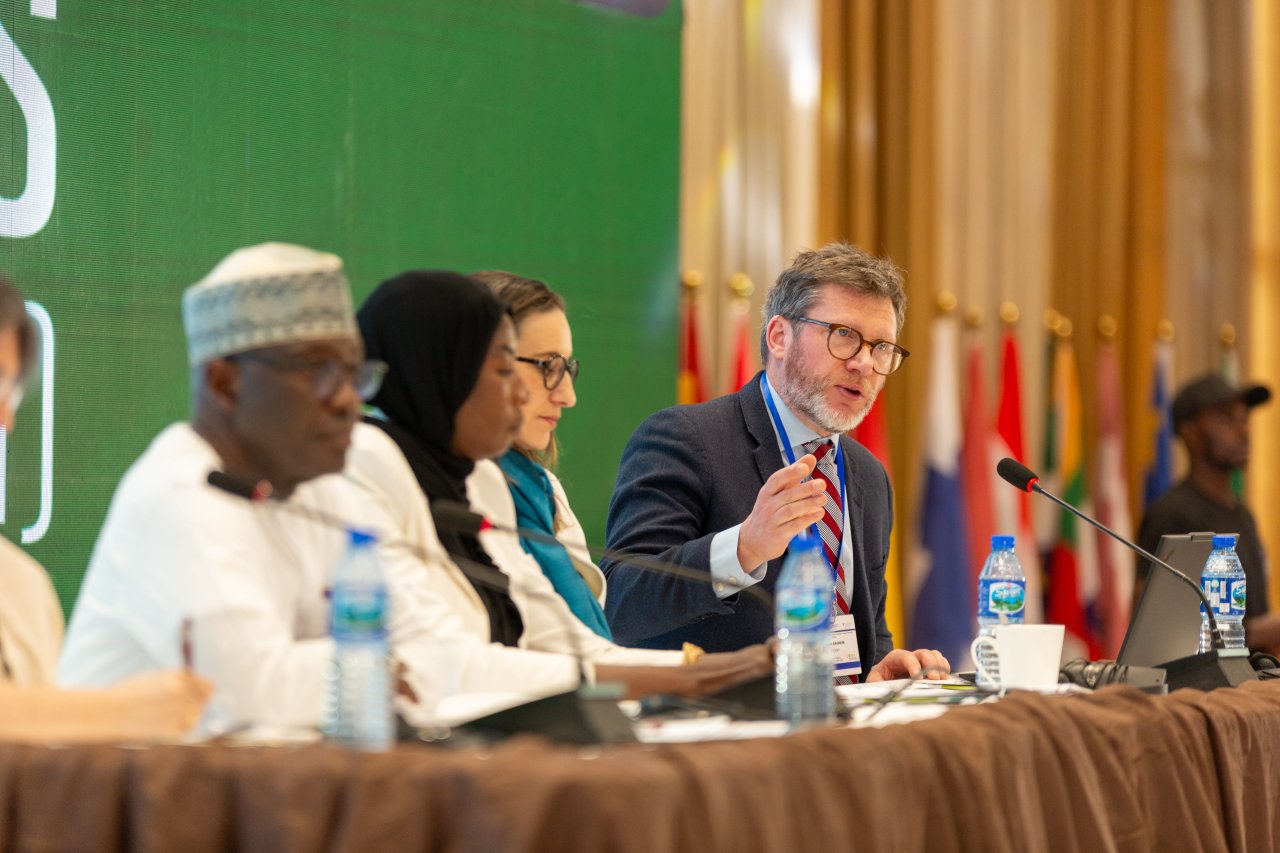
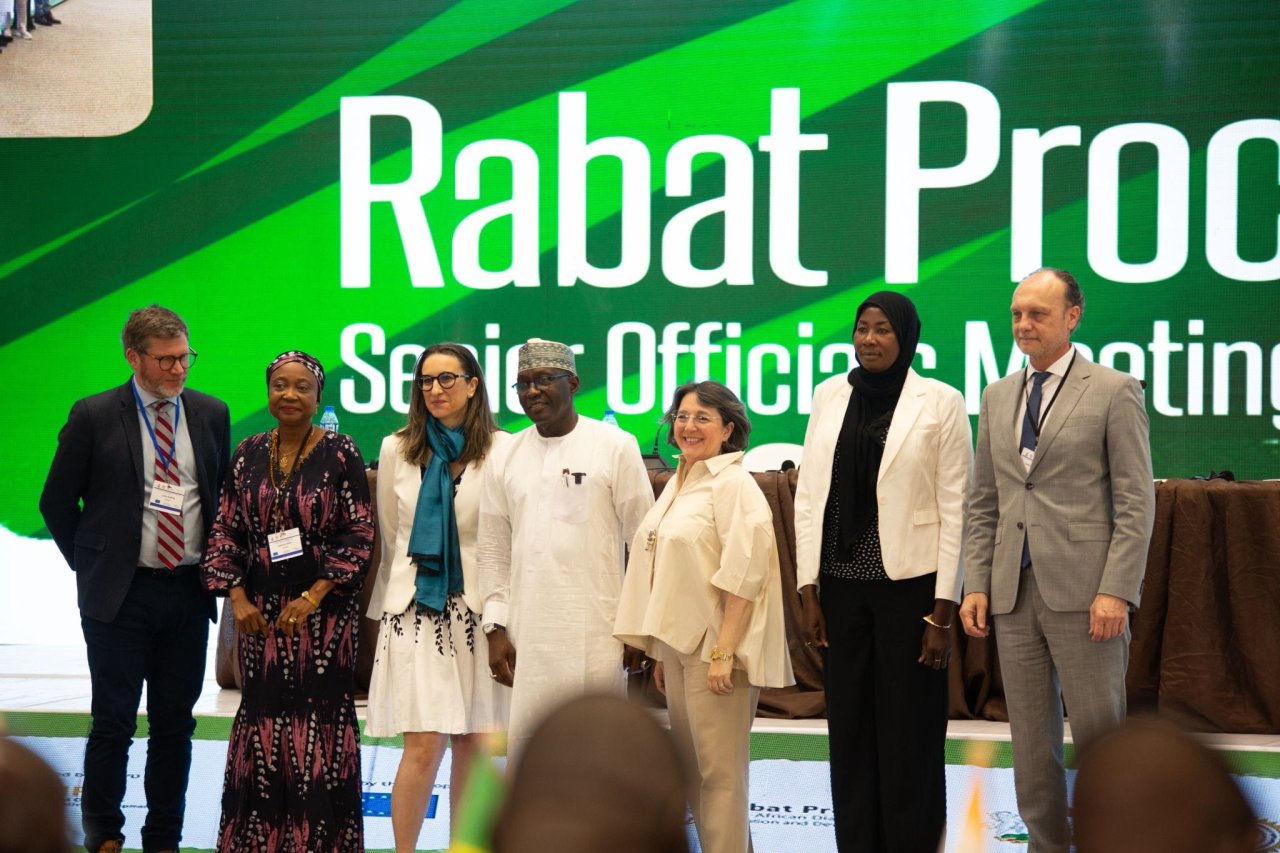
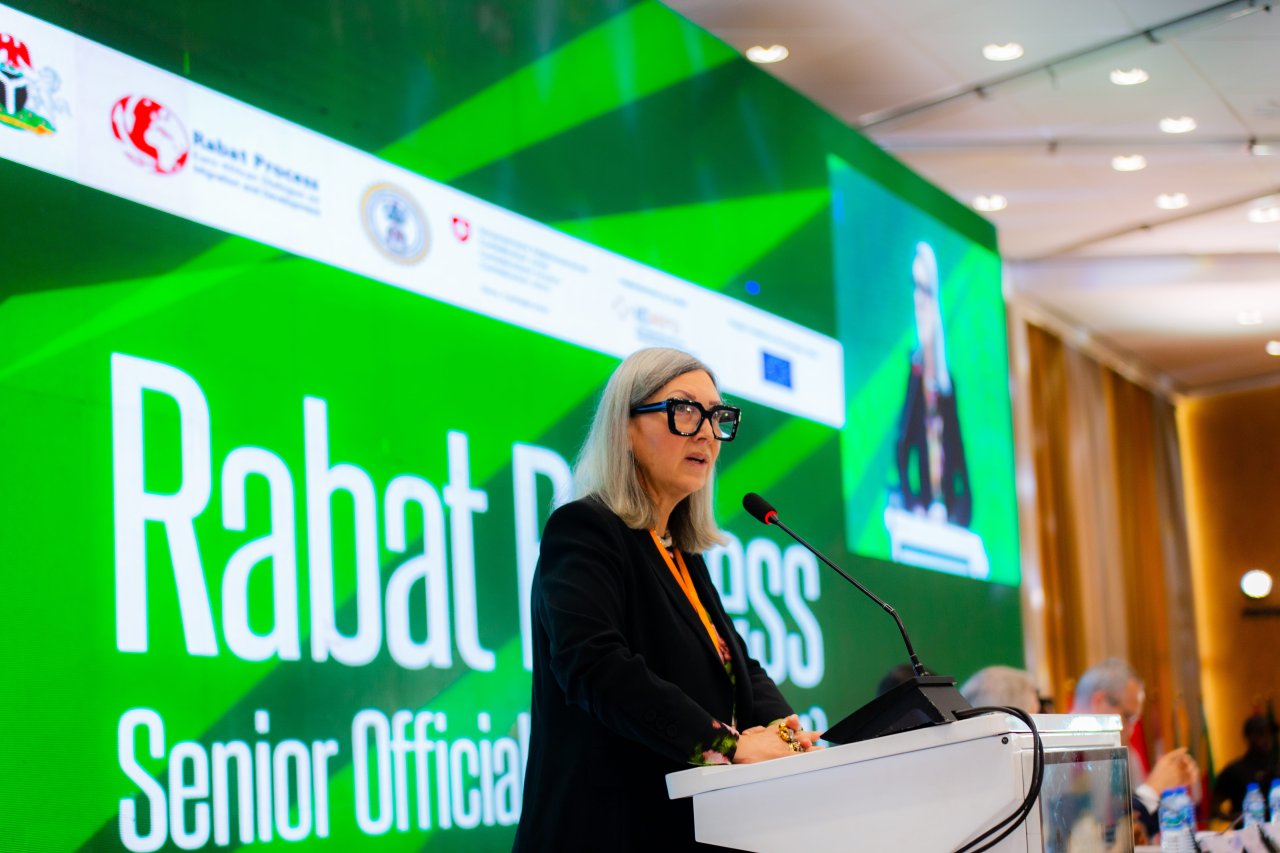
Held on 28-29 January 2026 in Abuja, the Senior Officials Meeting brought together over 100 delegates from 39 Rabat Process partner countries, including senior government officials, the European Commission, ECOWAS, and international organisations such as UNHCR, IOM, ICRC and UNODC. Co-chaired by Nigeria and Switzerland, the meeting provided an opportunity to take stock of activities implemented under the Nigerian Chairmanship, review progress in the implementation of the Cadiz Action Plan (2023-2027), and present Switzerland’s programme of work for the coming year.
Migration outlook and strategic directions for 2026
The SOM also offered a forward looking discussion on evolving migration dynamics across the Rabat Process region and their implications for strategic cooperation in 2026. Partner international organisations highlighted that while African migration remains largely intra regional, protracted conflicts, climate related displacement and tighter mobility controls are driving route reconfigurations, increased protection risks and growing humanitarian pressures along migratory corridors. Speakers underscored the need for coordinated, route based and people centred approaches, grounded in better data, stronger protection frameworks and enhanced Africa-Europe cooperation. Key priorities identified included expanding regular and skills based mobility pathways, strengthening protection and humanitarian responses along routes, improving criminal justice cooperation to address smuggling of migrants and trafficking in human beings, and ensuring that return and reintegration efforts remain voluntary, sustainable and embedded in broader development strategies.
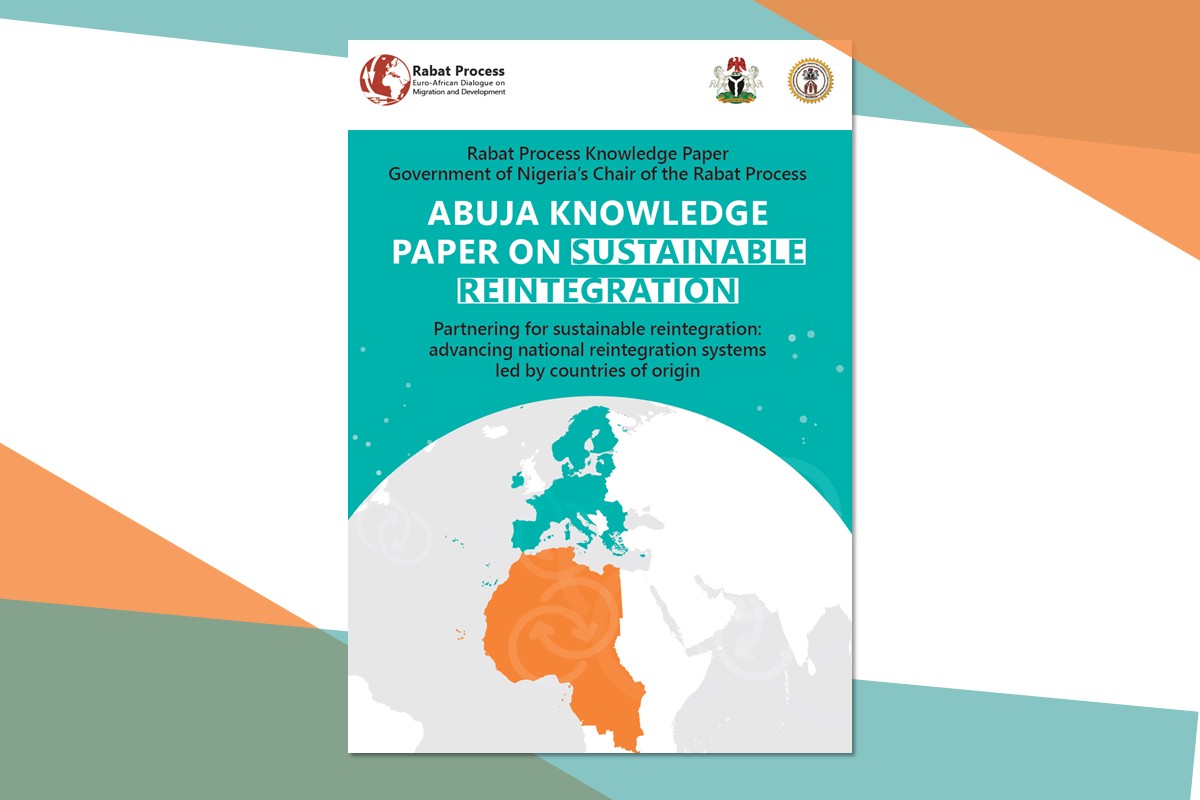
Launch of the Abuja Knowledge Paper on Sustainable Reintegration
The meeting also marked the presentation of the Abuja Knowledge Paper on Sustainable Reintegration, a flagship publication developed under the Nigerian Chairmanship in close cooperation with ICMPD. Grounded in consultations with partner governments, international organisations, donors, research institutions and field research conducted in Nigeria, the Paper provides an evidence based contribution to ongoing policy discussions on sustainable reintegration across the Rabat Process region. It highlights that sustainable reintegration is a shared priority across countries of origin, transit, and destination, that national ownership is key to ensuring coherent, accountable, long term results. The document also underscores that fragmented, short-term reintegration assistance limits impact: system based, longer term approaches are needed, that external partners remain vital as strategic collaborators, and that transitions toward country-of-origin-led systems must be gradual and context specific.
Building on Nigeria’s Chairmanship
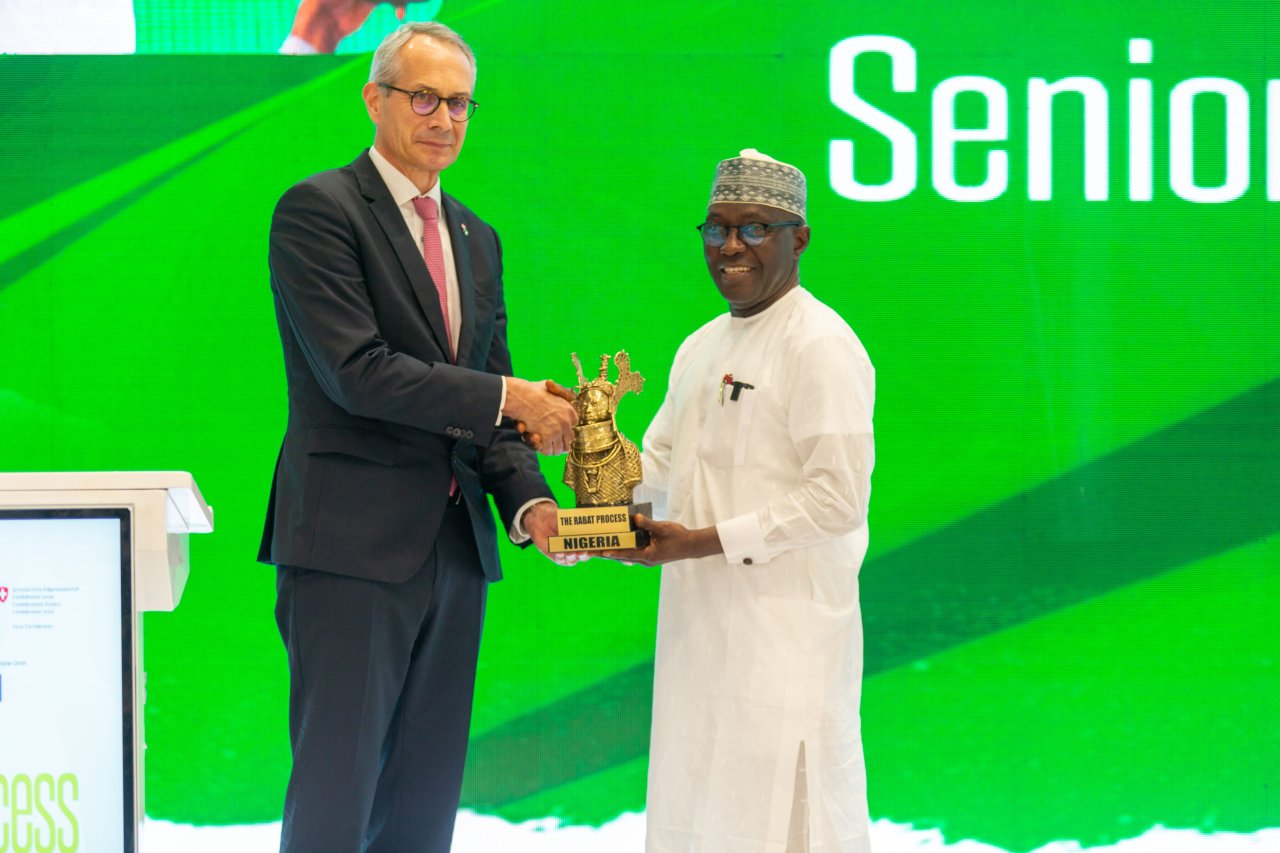
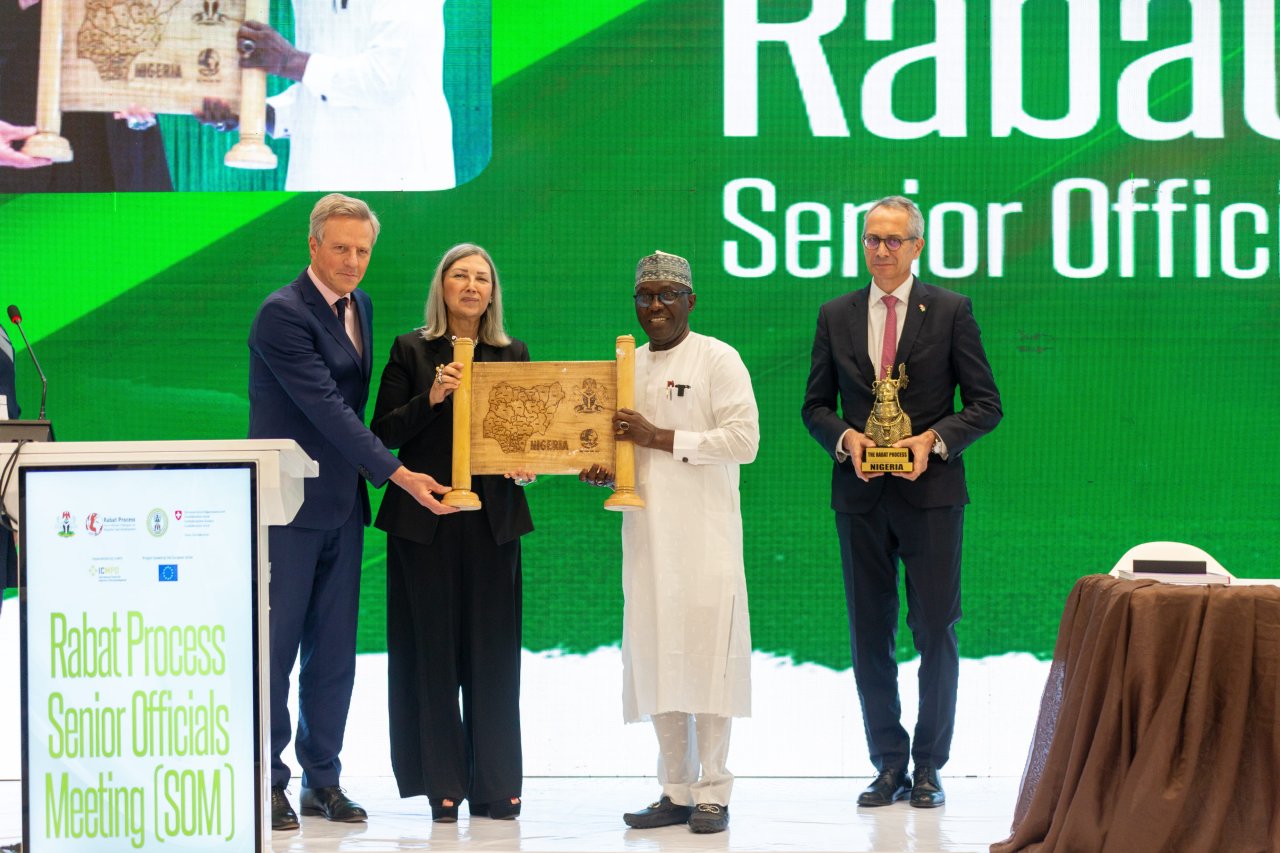
The handover of the Chairmanship to Switzerland marked the conclusion of a dynamic year under Nigeria’s leadership. Nigeria was the third country to assume the Chairmanship since the adoption of the Cadiz Action Plan and placed strong emphasis on innovation, inclusiveness and inter regional cooperation. Key achievements included the first ever webinar on migration data for evidence based policymaking; thematic work on education and innovation with youth participation; strengthened cooperation to prevent and combat migrant smuggling and trafficking in human beings; and reinforced engagement through the Network of National Focal Points for Missing Migrants and national statistical offices.
Nigeria also facilitated enhanced data exchange between the Rabat Process and the Khartoum Process through the JVAP Database, contributing to stronger evidence based migration policymaking. In parallel, MMD Grant Facility supported initiatives demonstrated the essential role of civil society organisations in advancing protection and asylum, maximising the development benefits of migration, preventing irregular migration, and reinforcing Euro African migration dialogue.
Video
Photos
The Strategic framework of the Rabat Process
Cadiz Action Plan (2023-2027)
Area 1 : Development benefits of migration / Root causes of irregular migration and forced displacement
Area 2 : Regular migration and mobility
Area 3 : Protection and asylum
Area 4 : Irregular migration, migrant smuggling and trafficking in human beings
Area 5 : Return, readmission and reintegration