

On 28 - 29 January 2026, Nigeria will host a Special event on climate-induced mobility, followed by the Senior Officials Meeting of the Rabat Process. Held in Abuja, Nigeria, these events will conclude the Nigerian Chairmanship of the Dialogue and mark the official handover of the Rabat Process Chairmanship to Switzerland. They will be preceded by a Steering Committee meeting on 27 January 2026, exclusively reserved for its 16 members.
Special event on climate-induced mobility
Climate change as a driver of mobility
Climate change is reshaping living conditions across the 57 partner countries of the Rabat Process, with significant implications for livelihoods, human rights, security, and mobility dynamics. Increasingly frequent droughts, floods, storms, rising temperatures, and land degradation are undermining food security, housing stability, access to water, public health, education, and decent work opportunities.
These impacts are not experienced equally. Communities that are highly dependent on natural resources, as well as those in pre-existing situations of vulnerability resulting from various factors - such as poverty, socio-economic precarity, gender inequalities, disability, or geographic isolation - are often among the first and most severely affected. Although these communities have often contributed the least to greenhouse gas emissions and the drivers of climate change, they are frequently among those most affected by its impacts. At the same time, their capacity to adapt remains limited by inequalities in accessing essential resources and services, including finance, education, social protection, climate-resilient infrastructures, or opportunities for professional reorientation. Climate stress also intersects with instability or conflict, either generating resource scarcity that exacerbates tensions and violence, contributing to the outbreak or intensification of conflict, or eroding resilience in post-conflict settings.
Taken together, all these dynamics will continue to drive both internal and cross-border movements within the Rabat Process partner countries.
As climate-related displacement frequently occurs within national borders or towards neighbouring States that are themselves exposed to climate risks, pressures on already constrained resources, public services, and protection systems are set to intensify. This, in turn, may contribute to the prolongation of displacement situations and increase the likelihood of secondary and onward forced movements, underscoring the importance of anticipatory, coordinated, and right-based policy responses.
From Reactive responses towards forward-looking policies
The Cádiz Action Plan called for redoubled efforts to mitigate and prevent the vulnerabilities associated with climate change and food insecurity (Preamble). It further encourages a more systematic integration of the root causes of irregular migration - including climate change - and forced displacement into national socio-economic development strategies and programmes, as well as into development cooperation initiatives, while promoting national ownership of the existing regional normative framework (Objective 2, Action 5).
In line with the commitments set out in the Cádiz Action Plan, this special event seeks to deepen the collective understanding of how climate change is influencing - and will continue to shape - mobility dynamics across the Rabat Process region. It aims to support the development of informed policy and programmatic approaches that can bolster on-site resilience for affected communities, ensure safe and dignified mobility pathways when movement has become a necessity, and support States in transitioning from reactive to anticipatory responses to climate-related pressures.
Specific objectives include:
- improve understanding of how climate change is influencing mobility patterns across the 57 partner countries of the Rabat Process;
- highlight concrete examples of how communities experience climate change and respond to climate-related pressures;
- discuss legal, policy and programmatic approaches that protect rights, support on-site resilience, and ensure safe mobility options when movement has become a survival strategy.
Senior Officials Meeting: mid-term of the Cadiz Action Plan
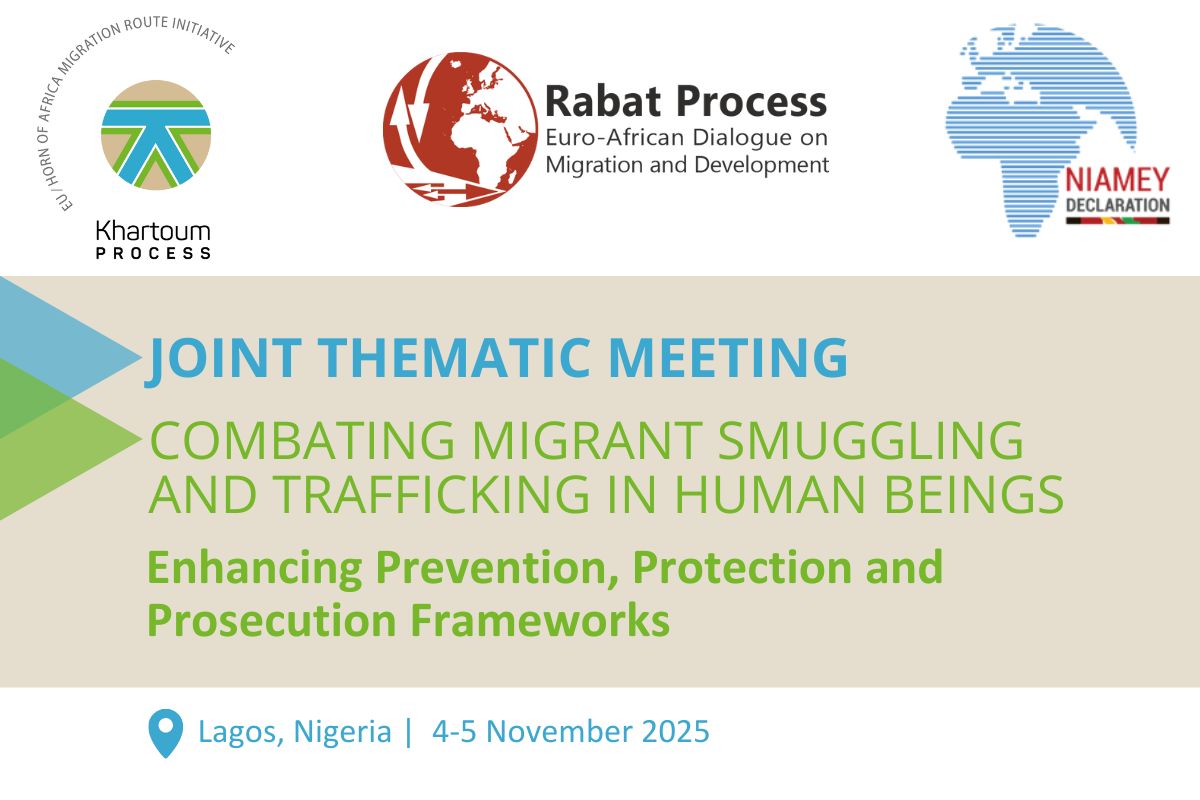
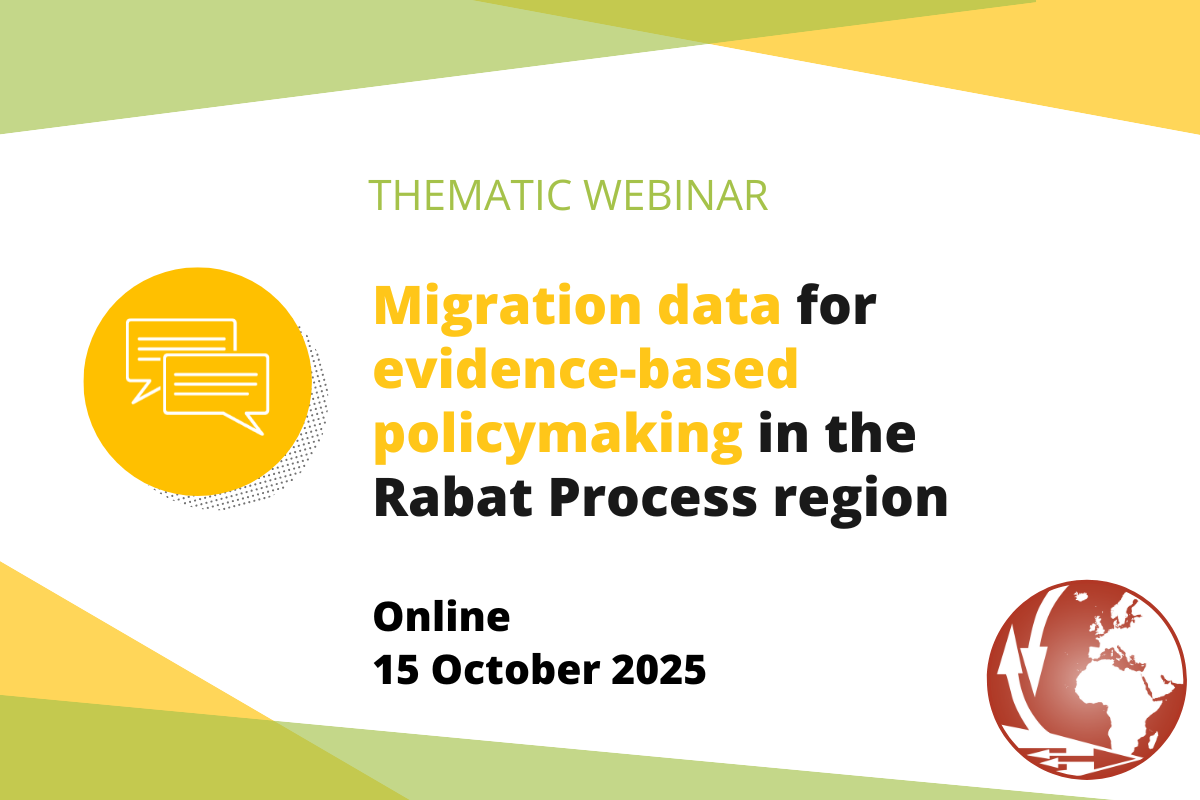
Since 30 January 2025, Nigeria has assumed the Chair of the Dialogue and put forward its priorities: building upon previous meetings, particularly regarding the role of youth and innovation; pursuing efforts to clarify the fate of missing migrants; enhancing the reflection on migration data management for evidence-based and value-driven policies: enhancing prevention, protection and prosecution frameworks to combat the smuggling of migrants and trafficking in human beings; and promoting sustainable reintegration. The Abuja Senior Officials Meeting will provide an opportunity to assess the achievements of the Nigerian Chairmanship and to take stock of progress at the mid-term of the Cadiz Action Plan. The Chairmanship of the Rabat Process will also be handed over to Switzerland.
In this context, the Rabat Process aims to promote coherence and complementarity with the Valletta Joint Action Plan (JVAP) – including through follow-up with the Khartoum Process – as well as with the 2030 Agenda for Sustainable Development, the Global Compact for Safe, Orderly and Regular Migration and the Global Compact on Refugees.
The main objectives of the Abuja Senior Officials Meeting are as follows:
- Present key trends and evolving dynamics shaping migration across the Rabat Process region;
- Review of the implementation of the Cadiz Action Plan under the Nigerian Chairmanship;
- Handover of the Dialogue Chairmanship to Switzerland, European member of the Steering Committee;
- Present and exchange on the 2026 thematic programme of the Swiss Chairmanship.